October 27, 2026
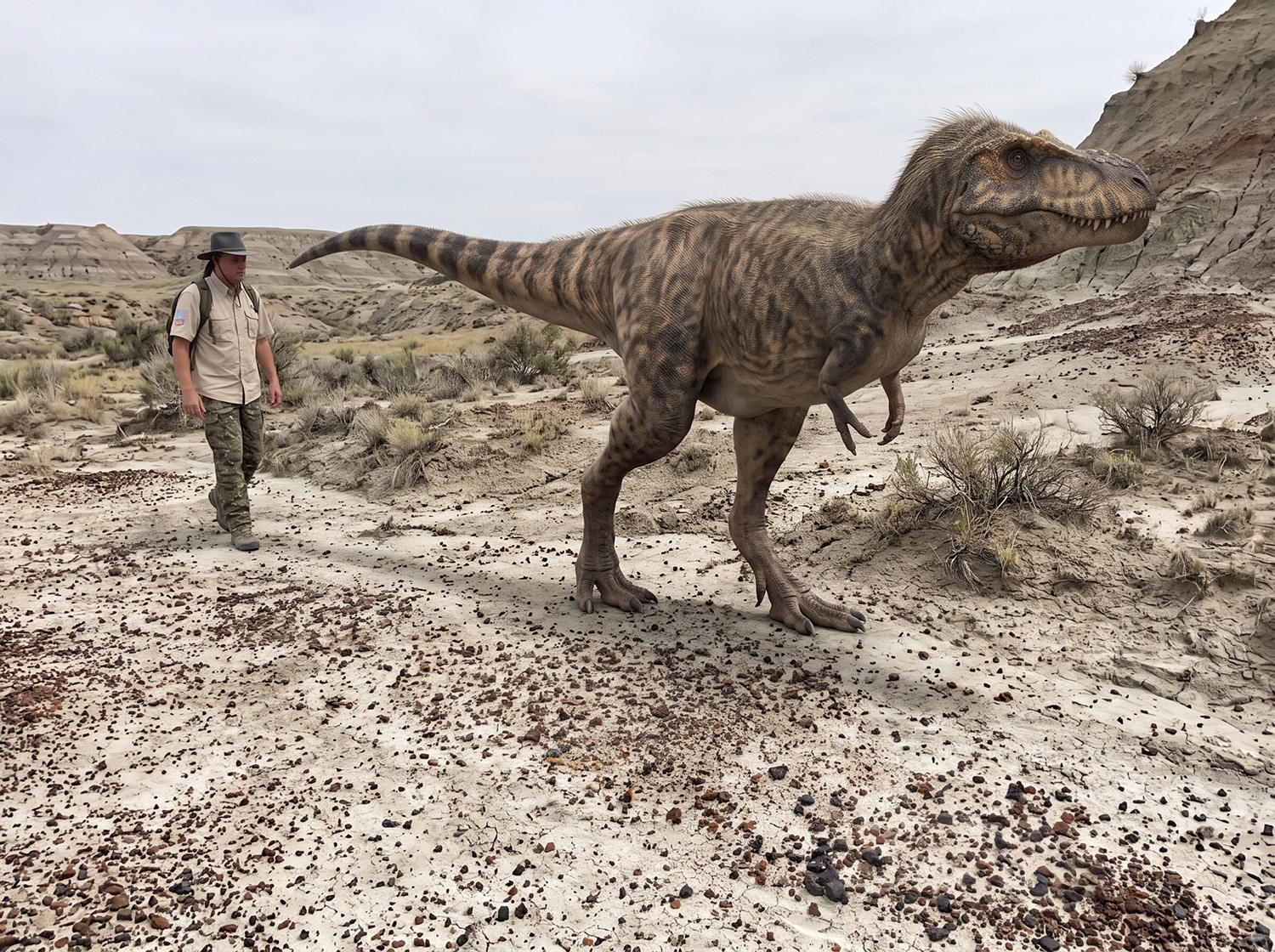
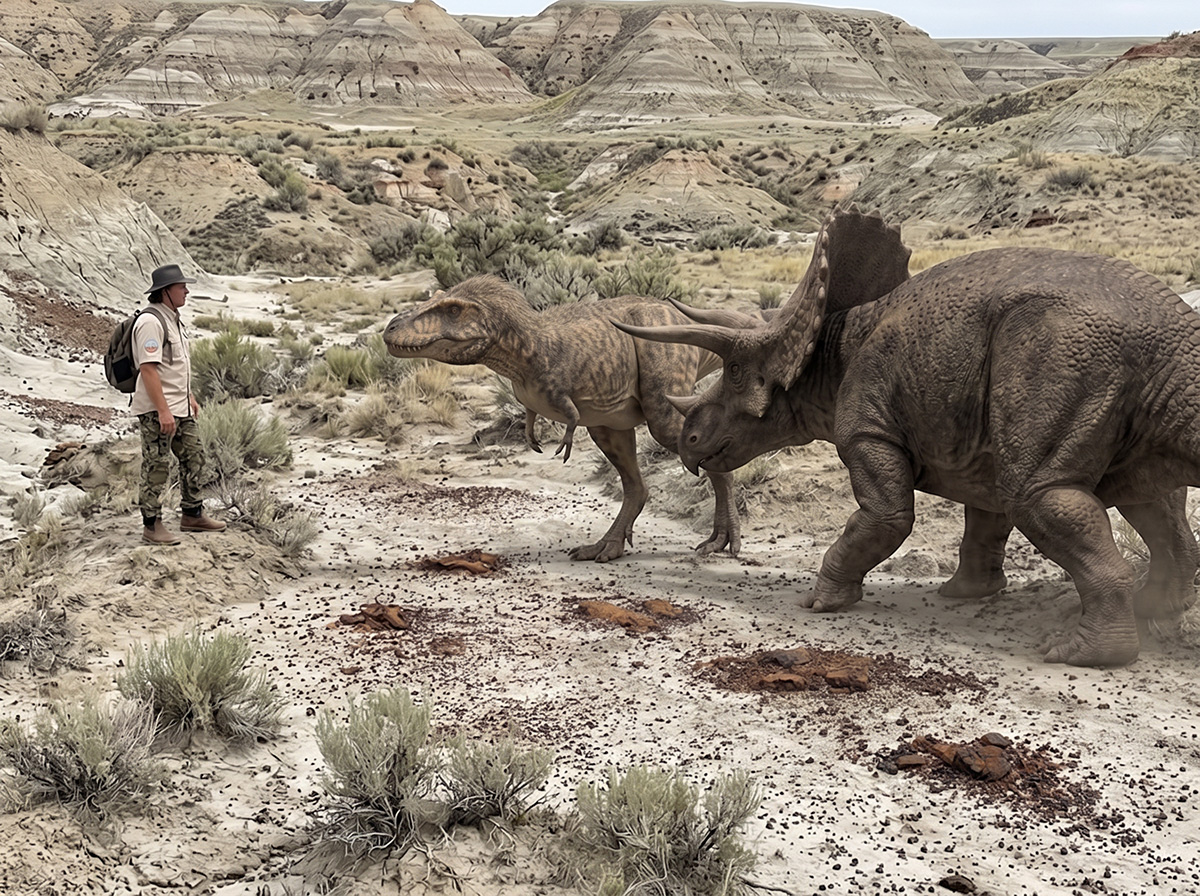
Just in time for Halloween, Dr. Michael Kjelland, associate professor biology and agribusiness at Mayville State University, is sharing a first look at a major paleontological discovery that he uncovered in eastern Montana this summer. Named “The Ghosts of the Cretaceous Trackway,” the trackway preserves what may be a 66-million-year-old encounter between two of the Late Cretaceous period’s most iconic dinosaurs, a theropod and a very large plant-eating ceratopsian.
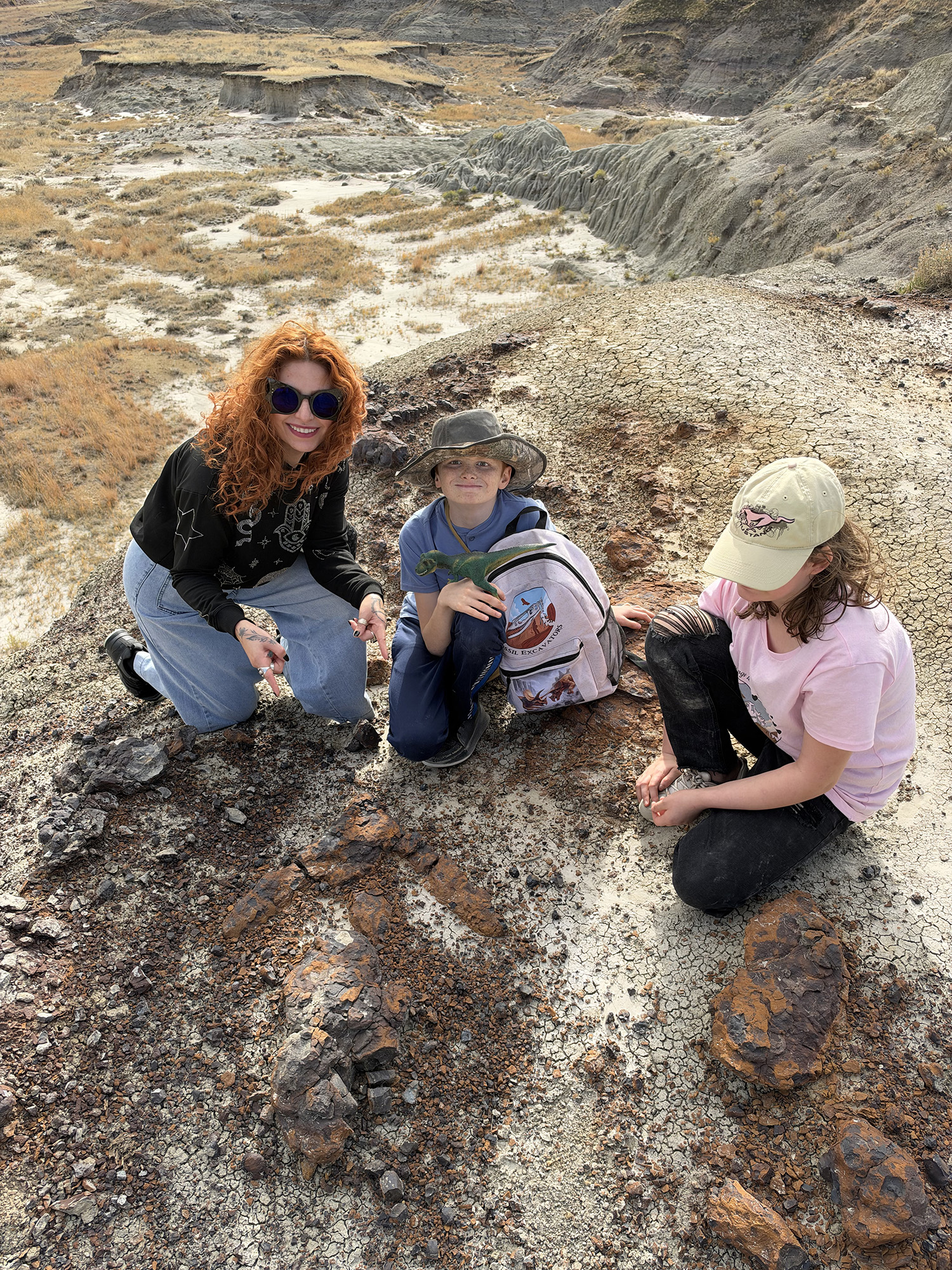
The discovery was made in the world-famous Hell Creek Formation near the Montana-North Dakota border. The site reveals overlapping trackways left by a theropod predator, possibly a juvenile Tyrannosaurus rex or Nanotyrannus, and a massive ceratopsian, most likely Triceratops, as they traversed an ancient mudflat millions of years ago.
“This is essentially a predator-and-prey scene frozen in stone,” said Kjelland. “The trackways occur on the exact same depositional layer, providing a rare glimpse into a moment in time when these animals shared the same landscape.”
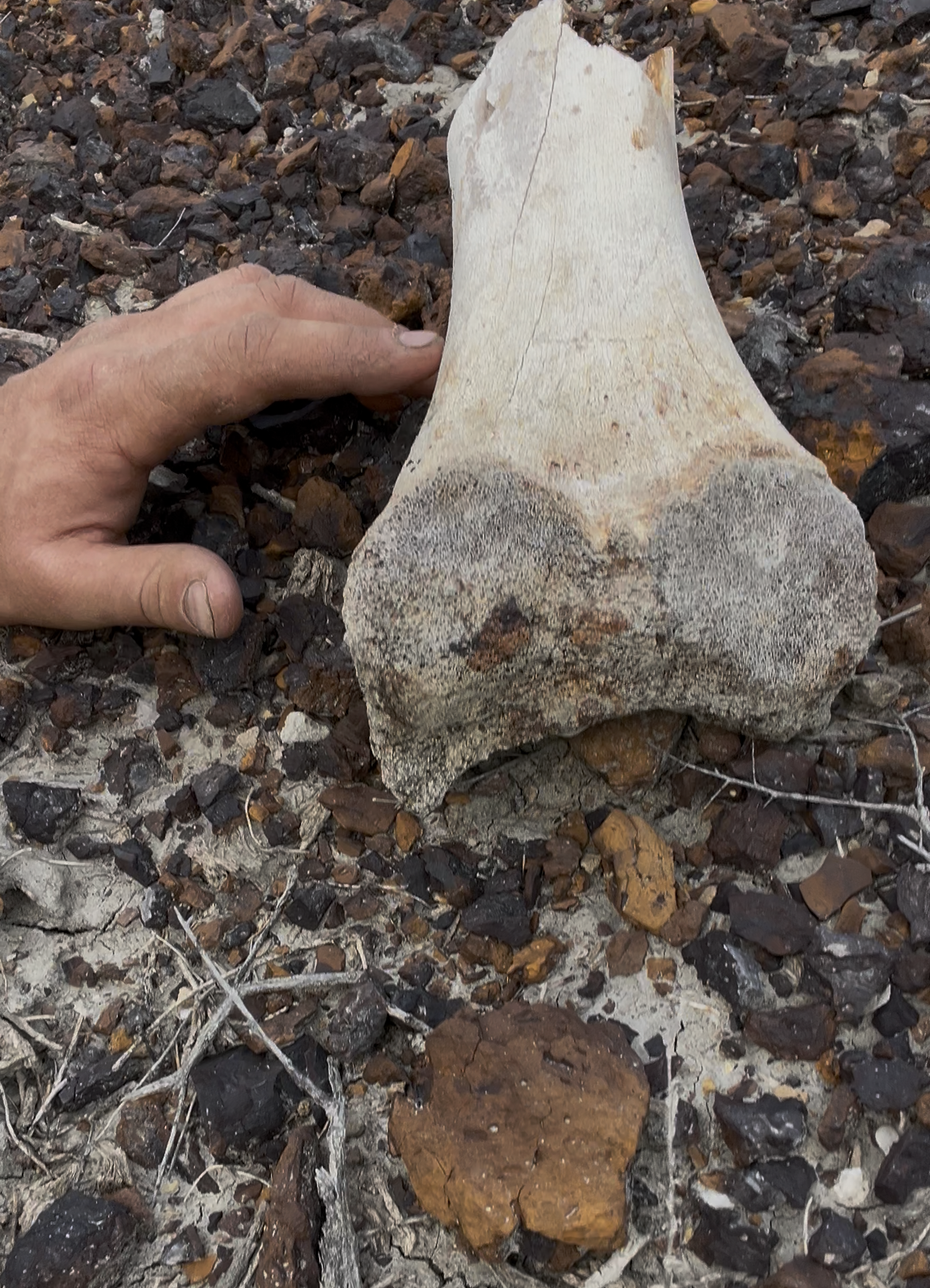
Adding to the significance of the discovery, researchers have also identified a theropod bone and additional fossil material eroding from the surrounding area. Kjelland and his team plan to return to continue excavation and investigation of the site next summer.
“This one is a first,” said Dr. David Burnham, Dr. Kjelland’s academic colleague. “What makes this discovery so remarkable is both in the rarity of dinosaur trackways and the fact that these tracks were found where they were. The odds of preserving and uncovering evidence like this are extraordinarily small, which makes the find even more significant.”
Rare three-dimensional preservation
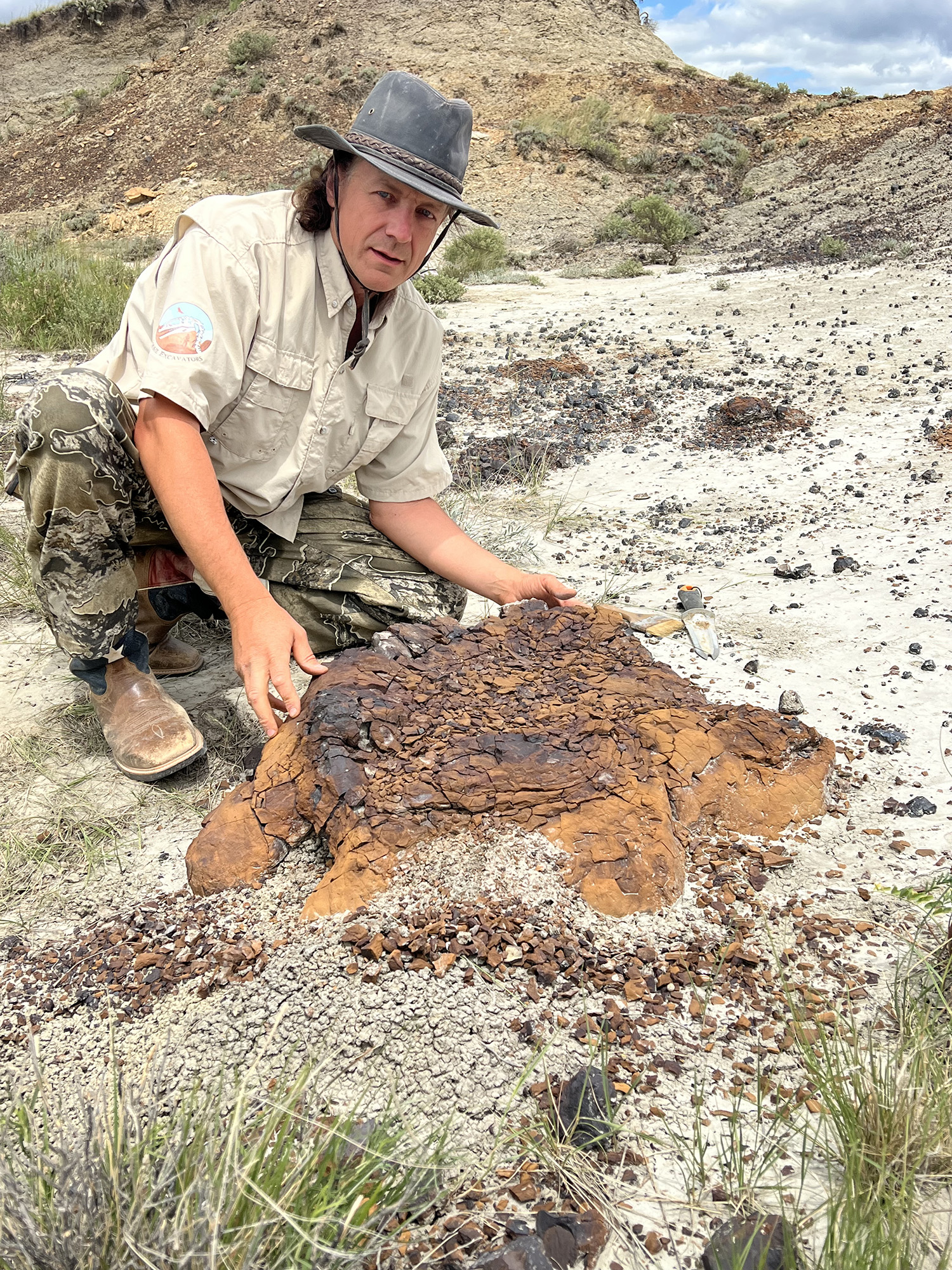
Unlike most dinosaur footprints, which are preserved as depressions in rock, the Hell Creek tracks are preserved as natural casts, creating a striking three-dimensional record of the animals’ movements.
Approximately 66 million years ago, both dinosaurs stepped into soft mud. Over time, those impressions were filled with iron-rich sand known as siderite. As the surrounding mudstone gradually eroded away, the dense, weather-resistant siderite remained, leaving the tracks raised above the ground in dramatic relief.
The result is an exceptionally rare preservation of both the shape and depth of the animals’ footprints, allowing researchers to examine their anatomy, movement, and behavior in extraordinary detail.
A story written in stone
The intersecting trackways tell a compelling story and raise questions that scientists may never fully answer: Was the theropod actively tracking its potential prey? Did the ceratopsian unknowingly cross the path of a nearby predator? Were the animals simply moving through the same environment hours or even days apart?
“Finding in situ natural casts of this scale and quality is incredibly rare,” Kjelland said. “These tracks provide a unique opportunity to study how these animals moved through their environment and how they may have interacted with one another.”
The trackways offer valuable information about stride length, body alignment, and locomotion, while also providing a tangible sense of the immense size of the animals that once inhabited the region.
Potential record-breaking discovery
Among the most striking features of the find is the enormous size of the ceratopsian footprint. Preliminary measurements suggest it rivals, and may even exceed, the largest known ceratopsian tracks ever documented.
The footprint is comparable in size to a 31-inch-wide track attributed to Ceratopsipes goldenesis, an ichnospecies discovered in Colorado’s Laramie Formation. Further study and measurement will be necessary to determine whether the Hell Creek specimen represents a new benchmark for ceratopsian track size.
The “ghosts” of ancient life
Scientists classify dinosaur footprints as trace fossils, or ichnofossils, because they preserve evidence of an organism’s activity rather than its physical remains.
“These are the ghosts of ancient life,” Kjelland explained. “The animals themselves are long gone, but their footprints remain as evidence that they once walked across this landscape.”
“Ghosts of the Cretaceous Trackway” reflects that concept, capturing the image of long-extinct creatures leaving behind fleeting traces of their existence that have endured for millions of years.
Looking ahead
Kjelland is formally announcing the discovery for the first time and intends to pursue publication of the findings in peer-reviewed scientific literature. The site may represent the first known example in the Hell Creek Formation of overlapping, three-dimensional trackways from two of the most recognizable dinosaur groups of the Late Cretaceous.
To support ongoing research, the team has assembled an extensive collection of documentation, including high-resolution photography, excavation footage, drone imagery, LiDAR mapping, and detailed 3D digital scans of the trackway.
If further research confirms the significance of the find, the discovery could provide one of the clearest pieces of physical trace evidence showing a theropod predator and a massive ceratopsian occupying the same environment at the very end of the Age of Dinosaurs.
For now, the tracks remain a rare and evocative reminder of a world lost to time, preserving in stone the footsteps of two prehistoric giants and a moment that occurred just before the extinction of the dinosaurs some 66 million years ago.